Olives and Oil
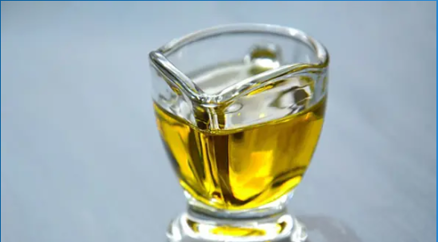
With the conclusion of the olive harvest season and in honor of Chanukah, we will probe several halachot related to oil
According to many Rishonim, the obligation to separate terumot and ma‘aserot from olives in our time is rabbinic, like all laws of terumot and ma‘aserot today. Others hold that the obligation is biblical, as the verse states: “The first of your wine, your grain, and your oil… you shall give to him.”
The obligation of separation applies both to olives from trees that grew in the Land of Israel and are owned by a Jew, and to olives that grew in a non-Jew’s grove for the purpose of oil, if the gemar melachah, completion of processing (pressing the oil or pickling the olives for eating) was done by a Jew.
Olives grown on clearly ownerless land (hefker), or from municipal land where definite permission has been given to anyone to pick them, are considered hefker and thud are exempt from terumot and ma'aserot. However, if it is uncertain whether the olives are indeed hefker, terumot and ma'aserot should be separated without a blessing.
Before separating, touch the oil in order to render it ritually impure, so that it may later be used. This is because in our time even a kohen may not derive any benefit from pure terumah; if the oil is not touched before the separation process, once designated as terumah, it will be forbidden to make it impure later on.
At oil presses there is often a mixture of oils originating from previous pressings (since the oil-press is not cleaned between different customers). Since halakhically we rule that liquids do mix (yesh bilah be-lach), separation should be done according to the regular required amount.
Use of the Oil
Many kohanim customarily use the oil for lamp light, since even today it is permitted for kohanim to benefit from burning impure oil.
Even in this case, attention must be paid to several details: the bottle of terumah oil should be clearly marked, and it must be made absolutely clear that this oil may be used only for lighting and not for consumption. It is therefore recommended to store it separately from edible oils.
Lighting with this oil is also permitted for the wife of a kohen who is the daughter of a levi or yisrael. However, a daughter of a kohen married to a levi or yisrael, who is not fully supported by her father and does not eat with her father at his table, may not use terumah oil for lighting Shabbat candles.
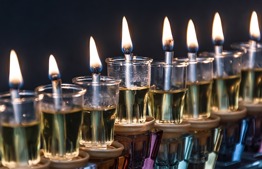
Regarding Chanukah candles, the posekim disagree whether it is permitted to use impure terumah oil, since one may benefit from the burning of terumah oil, whereas it is forbidden to derive benefit from Chanukah lights. Therefore, in practice, it is permitted to use terumah oil for Chanukah candles only if no other oil is available.
Regarding Chanukah candles, the posekim disagree whether it is permitted to use impure terumah oil, since one may benefit from the burning of terumah oil, whereas it is forbidden to derive benefit from Chanukah lights. Therefore, in practice, it is permitted to use terumah oil for Chanukah candles only if no other oil is available.