

Kislev 5786, Issue no. 24
Article
Halachic guide for separating terumot and ma'aserot from olive oil
Rabbi Netanel Oyerbach
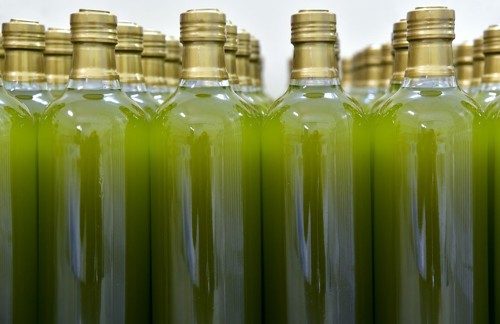
When it is possible to use produce for fuel, such as olive oil, should we separate more than the kolshehu for terumah gedolah (as we do for other types of produce)?
Q&A
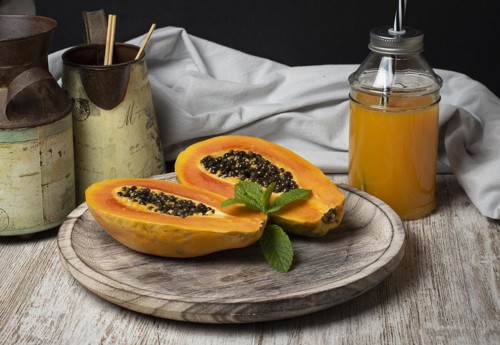
Which ma'aser do I separate from Kislev papaya harvest?
Short Answer / Dr. Mordechai Shomron, agronomist
There is a dispute among the posekim whether the papaya is considered a fruit tree or a vegetable. For this reason, say the conditional text: "if this year requires ma'aser sheni, it is ma'aser sheni, and if the year requires ma'aser ani, it is ma'aser ani." Then proceed to separate ma'aser sheni without a blessing.
Clip
Advanced separation
There are many fruit trees on a closed high school campus where I work. The students won't necessarily separate terumot and ma'aserot. Is there anything I can do to prevent them from eating untithed produce? Rabbi Moshe Bloom provides a solution.
If you can't see the clip, click here >>
Plants in the Garden of Mitzvot: Is khat subject to orlah?
Dr. Mordechai Shomron, agronomist
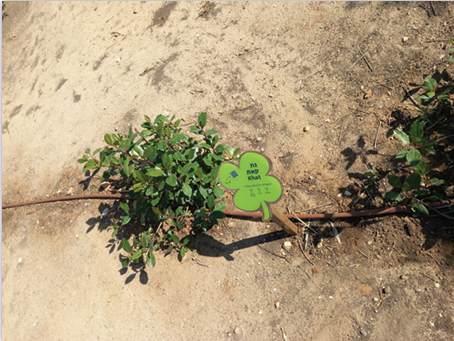
Khat is an evergreen perennial woody shrub. Its leaves are traditionally chewed as a stimulant. Since khat is halachically considered a tree, are the leaves considered "fruit"? Are they subject to the orlah prohibition?
News
Save the Date: Chanukah family event at Torah VeHa'aretz Center
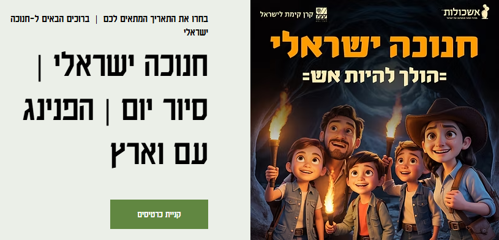
Torah VaHa'aretz Center will host a two-day family event this Chanukah!
Date: Wednesday and Thursday, 27-28 Kislev, December 17-18
Time: 10 AM – 2:30 PM
Admission fee, subsidized by Eshkolot: Only NIS 10 per person!
What's on the program?
Visitors' Center, a Chanukah-themed treasure hunt in the Garden of Mitzvot (ask for the treasure hunt in English), a self-guided tour of the Garden of Mitzvot (booklet in English), a Chanukah Kahoot! (Hebrew), arts and crafts, a film about separating terumot and ma’aserot, VR binoculars (for an additional fee), and family photo opp. with ancient-style clothing and the Seven Species.
The event will take place in all weather conditions.
Purchase your tickets today >>
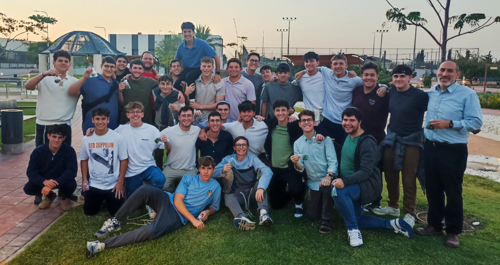
Herbs, halachah, and a Kahoot! showdown for South African & Australian students
Roughly 850 visitors participated in the two-day family event at Torah VeHa'aretz Center. Participants enjoyed a wide variety of sukkot-related activities, a thrilling VR activity, toured our state-of the-art Visitors Center, and treasure hunted their way through our stunning botanical Garden of Mitzvot.
Nefesh B'Nefesh seniors' day
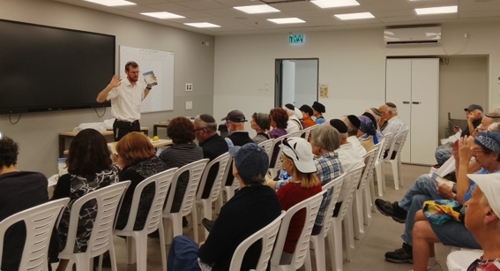
This summer, a recent immigrant quipped, “Nefesh B’Nefesh should take us straight from Ben-Gurion Airport to the Torah VeHa’aretz Center so we can learn about the special mitzvot hateluyot ba'aretz.” We couldn’t agree more!
For the first time, we were delighted to host a group of Nefesh B’Nefesh seniors for an inspiring visit to our Center, complete with a tour of the Garden of Mitzvot and a terumot and ma’aserot workshop—featuring lemons from the only non-orlah tree in our garden (the Garden of Mitzvot is still pretty new, after all). According to Nefesh B’Nefesh’s events manager, there was such a big demand, many participants were waitlisted. But no fear, we’re already planning the next Nefesh B’Nefesh visit and can’t wait to welcome the next group.
A special visit for special visitors
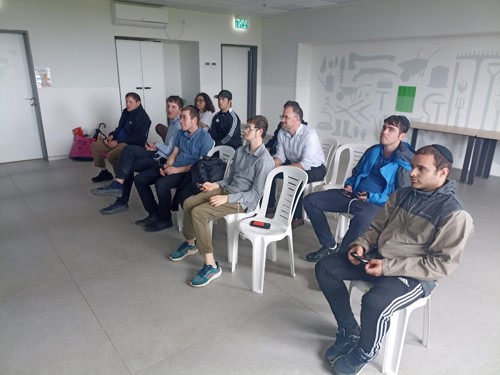
This week, we had the distinct privilege of hosting a small group of young men from Yeshivat Darkaynu, the only year-in-Israel programs designed for young men with special needs based in Gush Etzion. Our special visitors enjoyed a hands-on tour of our Garden of Mitzvot picking herbs for Havdalah bags, tasting stevia leaves, and learning about papaya – all this under umbrellas, since we had a bit of rain. They played a competitive Kahoot! and finished their immersive, multi-sensory experience in our Visitors' Center. Two weeks ago, we hosted a visit from their parallel program for young women, Midreshet Darkaynu. We would like to thank Rabbi Aryeh Sokol, the head of the program.