
Mitzvot of the Land
Guidelines for Separating Terumot and Ma'aserot from Olive Oil - 5786 and 5787
Olive harvest season has arrived. At what point should terumot and ma'aserot be separated? What about olives with different levels of obligation? How much should be designated as terumah if intending to give the oil to a kohen? The guidelines address these questions and more.
Mitzvot of the Land
Guidelines for Tithing Lemons: Shevat 5786 to Shevat 5787
On Tu Bishevat (15 Shevat) 5786, we transitioned from a ma'aser ani year to a ma'aser sheni year for fruit. For most fruits, the ma'aser year is determined by the stage of chanatah, fruit set. For etrogim, however, the determining stage is harvest, like vegetables. What is the status of lemons and to which ma'aser year do lemons harvested after 15 Shevat 5786 belong to?
Mitzvot of the Land
Kilei Ilan (grafting): scion and rootstock combinations for trees and vegetables
Laws of kilei ilan (grafting): permitted and prohibited scion and rootstock combinations for fruit trees, citrus trees, ornamental trees, and vegetables (update: Tevet 5785-January 2025).
Mitzvot of the Land

Laws of ma'aser sheni
Redeeming ma'aser sheni and handling with the coin in our days is complex and can be daunting. In this article we will explain the main halachic guidelines.
Mitzvot of the Land
Intermediate plant classification as vegetables or trees
While most plants fall into neat categories as trees or vegetables, some are on the seam and have characteristics of both. This chart classifies such intermediate plants, which has bearing on the laws of orlah, berachot and kila’im. Hilchot Ha'aretz, 133.
Mitzvot of the Land
Text for separating terumot & ma'aserot with side-by-side translation
This formula for separating terumot and ma'aserot is accompanied by a side-by-side English translation. It is an excerpt from the booklet Mitzvot of the Land in a Nutshell
Mitzvot of the Land
The practical laws of orlah
Orlah is a biblical prohibition, even today. In this article we will discuss a few of its practical halachot. From The Laws of Orlah for the Backyard, Part II.
Mitzvot of the Land
Shehechiyanu: practical information
In today’s age, the concept of “seasonal fruit” is constantly changing. This article features a list of more than 100 common and rare fruits and vegetables and notes each one's halachic status. The list is current as of Tammuz 5778.
Mitzvot of the Land
Shehechiyanu on new fruit today
This article reviews methods that make fruits and vegetables accessible year-round, and discusses how they impact on making the shehechiyanu blessing today.
Mitzvot of the Land
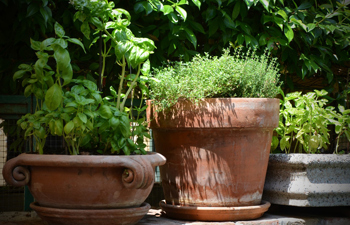
Herb classification as tree or vegetable for kilei zera'im and kilei hakerem
A comprehensive list of common herbs with English, Hebrew, and Latin names, categorizing them as trees or vegetables, to avoid the prohibitions of kilei zera'im and kilei hakerem (interplanting with annuals and vineyards). Since there are different halachic guidelines for vegetables and trees, this is a valuable reference.
Mitzvot of the Land