Guidelines for Separating Terumot and Ma'aserot from Olive Oil - 5786 and 5787
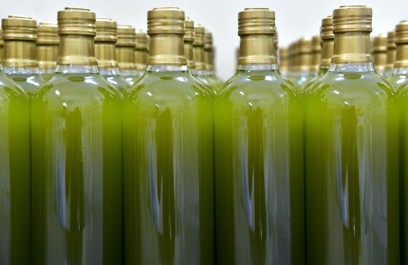
Olive harvest season has arrived. At what point should terumot and ma'aserot be separated? What about olives with different levels of obligation? How much should be designated as terumah if intending to give the oil to a kohen? The guidelines address these questions and more.
Ownership of the Olives
The obligation to separate terumot and ma'aserot (T&M) applies both to (1) trees that grew in Israel that are owned by a Jew and to (2) olives that grew in a non-Jew’s orchard for the purpose of oil production, if the gemar melachah, completion of the processing (pressing the oil or pickling the olives for eating) is performed by a Jew.
Olives from areas that are definitely ownerless, or from municipal areas that have given definite permission to anyone to harvest, are exempt from T&M. In any case of doubt whether the olives are truly ownerless, one should separate T&M without a blessing.
Method of Separation
One may not mix olives from ownerless trees with olives from trees that have owners in the olive press. A facility that mixes oil obligated in T&M with oil from ownerless olives—since liquids mix thoroughly (יש בילה בלח)—the mixture requires separating an amount corresponding to all the oil produced there, including the oil from the ownerless olives.
After extracting the oil, before separating T&M, touch the oil to make it tameh, ritually impure, so that it may be used afterward for Shabbat or Chanukah candles; today, even a kohen may not benefit from pure terumah.
If the terumah oil is in sealed bottles, the bottles should be opened and placed close together so that all the bottles are in one area and under one roof. After bringing the bottles together, separate T&M.
If intending to actually give the terumot to a kohen, separate nearly 3% of the total oil to cover both terumah gedolah and terumat ma'aser. If one will not give the oil to a kohen, however, only slightly more than 1% of the total oil should be separated (as with separation of other types of produce).
Olive harvest from 5786 requires the separation of ma'aser ani, because the olives began to form the previous year (5785), which was a ma'aser ani year (the third year in the shemitah cycle). Therefore, one recites one blessing: “to separate terumot and ma'aserot.”
In contrast, the 5787 harvest requires the separation ma'aser sheni, since the olives blossomed the previous year (5786), a ma'aser sheni year (the fourth year in the shemitah cycle). Therefore, recite two blessings: “to separate terumot and ma'aserot,” and “to redeem ma'aser sheni,” and then the associated text.
After the Separation
It is preferable to actually give the terumah and terumat ma'aser to a kohen, so that he and his household will be able to benefit from it for lamp oil. Label the container “Impure terumah for lamp oil.”
If it is not possible to give them to a kohen, pour the terumot on the ground.
Download the guidelines in a PDF document here.