Guidelines for Tithing Lemons: Shevat 5786 to Shevat 5787
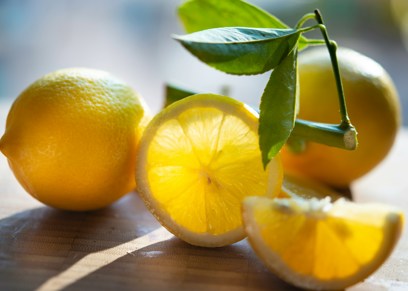
On Tu Bishevat (15 Shevat) 5786, we transitioned from a ma'aser ani year to a ma'aser sheni year for fruit. For most fruits, the ma'aser year is determined by the stage of chanatah, fruit set. For etrogim, however, the determining stage is harvest, like vegetables. What is the status of lemons and to which ma'aser year do lemons harvested after 15 Shevat 5786 belong to?
|
Produce Status |
15 Shevat 5786 – 29 Elul 5786 |
1 Tishrei 5787 to 15 Shevat 5787 |
|
Definitely untithed
|
1. Separate a bit more than 1%. 2. Recite the first blessing: להפריש תרומות ומעשרות. 3. Recite accompanying text, including the conditional text "Another 9% on the lower part of the produce is ma'aser sheni, and if the year requires ma'aser ani, it is ma'aser ani" 4. Skip the blessing for redeeming ma'aser sheni 5. Recite the text for redeeming ma'aser sheni: "What I have designated as ma'aser sheni, plus a quarter of its value, is now redeemed …" 6. Double wrap and dispose the terumot (1%+ you set aside) |
1. Separate a bit more than 1%. 2. Recite the first blessing: להפריש תרומות ומעשרות. 3. Recite the accompanying text 4. Recite the blessing for redeeming ma'aser sheni. 5. Recite the text for redeeming ma'aser sheni: "What I have designated as ma'aser sheni, plus a quarter of its value, is now redeemed …" 6. Double wrap and dispose the terumot (1%+ you set aside)
|
|
Doubt whether titithed
|
1. Separate a bit more than 1%. 2. Skip the blessing for separating terumot and ma'aserot (see §2 above). 3. Recite the accompanying text, including the conditional text (see §3 above). 4. Skip the blessing for redeeming ma'aser sheni. 5. Recite the text for redeeming ma'aser sheni. 6. Double wrap and dispose the terumot (1%+ you set aside). |
|
To download this guide on PDF, click here.
On Tu Bishevat (15 Shevat) 5786, we transitioned from a ma'aser ani year to a ma'aser sheni year for fruit. For most fruits, the ma'aser year is determined by the stage of chanatah, fruit set.[1] For etrogim, however, the determining stage is harvest, like vegetables.
Lemons: a regular fruit or an etrog?
Several posekim question whether lemons should follow harvest as well (ex. Chazon Ish). For this reason, for lemons harvested between Tu Bishevat 5786 and 29 Elul 5786, there is a halachic doubt regarding the ma'aser year the lemons belong to. The chart above takes this doubt into consideration.
Fruits from different ma'aser years on the same tree
Another issue unique to lemon trees is that there are multiple blooming seasons, with blooming occurring often before and after Tu Bishevat. It is very common to have on the same tree lemons that belong to different ma'aser years. For this reason, it is best to harvest ripe lemons before Tu Bishevat to avoid this issue.
If nevertheless one harvests a batch of lemons where some may have reached chanatah before Tu Bishevat and others after:
Take two lemons, one big fruit that definitely reached chanatah before Tu Bishevat, and a small fruit that definitely developed after Tu Bishevat, separate the 1% and a bit from each lemon, and proceed with the procedure outlined in the chart above.
Note: Photo by Cristina Anne Costello on Unsplash
[1] When the fruit is roughly the size of an olive; for olives, when it is one-third its regular size. So if fruits reach this stage after Tu Bishevat, they belong to the new ma'aser year. Fruit that develops before Tu Bishevat, even if harvested afterwards, nevertheless belongs to the previous year (excepting etrogim, as noted above).+