Mitzvot relevant to anyone with a garden in Israel
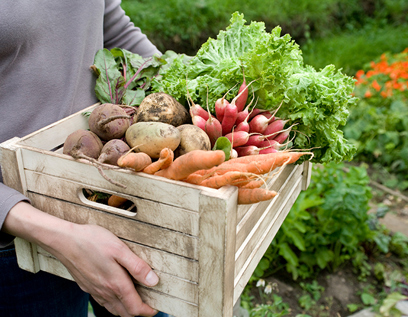
Anyone who has a home garden in Israel has the merit of engaging in many of the mitzvot dependent on the Land of Israel; below are the most common.
According to the Sefer HaChinuch, there are more than 45 mitzvot that are considered mitzvot hateluyot ba’aretz, mitzvot dependent on the Land of Israel, and they fall into two categories:
(1) Mitzvot related to the sanctity of the land, as manifested by helping the poor and mutual responsibility (such as ma’aser ani, shemitah, lekket, shichechah, pe’ah, peret, ollelot, ma’aser rishon);
(2) Mitzvot that are an expression of our bond with the sanctity of Jerusalem, the sanctity of the kohanim, and to the sanctity of the Beit Hamikdash (such as terumah gedolah, terumat ma’aser, ma’aser sheni, bikkurim, hafrashat challah, neta revay, orlah, kilei zera’im, kilei ilan, and chadash).
Anyone who has a home garden in Israel has the merit of engaging in many such mitzvot; below are the most common:
Terumot & Ma’aserot
There is nothing more joyous than picking the fruits in your garden and eating them after taking terumot and ma’aserot with a berachah. I’ll never forget when a relative of mine flew in from the United States to visit my parents, who live in a yishuv. My father invited him out to the garden, they picked grapes together from the grapevine and then made the brachah on separating terumot and ma’aserot. This relative was so excited, as this was the first time he merited taking terumot and ma’aserot with a berachah, and since the Biblical (de’oraita) injunction is to separate terumot and ma’aserot from dagan tirosh ve-yitzhar, grain, wine (grapes) and (olive) oil!
Terumot and ma’aserot include 20(!) mitzvot, 6 positive (aseh) and 14 negative (lo Taaseh).
See our visual guide on separating terumot and ma'aserot
See the text with the formula for separating terumot & ma'aserot
The process of separating terumot and ma'aserot involves designating parts of the produce as gifts, depending on the year in the shemitah cycle. Some are meant for a kohen, levi, and on certain years for the poor, and on others, as ma'aser sheni. Actually giving the gifts today to their intended recipients is a mitzvah and is difficult to perform today. Furthermore, on ma'aser sheni years, the sanctity of the produce needs to be transferred to a coin, involving many intricate halachot.
To streamline the process, help consumers give the ma'aserot in the most optimal halachic fashion, and handle the ma'aser sheni coin on their behalf, we provide a service called Beit Ha'otzar, our ma'aser fund.
Become a member of Beit Ha'otzar.
Kilei Zera’aim & Kilei Hakerem
Kilei zera'im: The prohibition of planting different types of annuals in close proximity to one another. Halachah determines the minimum permitted distance between different types of plants so as not to transgress this prohibition. There are different categories of plants, and each has its individual guidelines (grains, vegetables, and legumes).
Kilei Hakerem: It is forbidden to plant a seed from grains, legumes, or vegetables in close proximity to a grapevine.
To calculate the appropriate distance between various plants, see our Kilei zera'im calculator.
Kilei Ilan
Most fruit trees today are grafted, and some are grafted in a prohibited manner (most problematic are deciduous trees, such as peach, plum, almond, and pear). The majority ruling forbids planting, watering, and cultivating such saplings. This prohibition is biblical and applies both inside and outside Israel.
Before purchasing trees in a nursery, it is extremely important to check that the scion-rootstock pair are halachically compatible.
We have compiled a chart of trees that are grafted in a prohibited fashion; which ones are sometimes grafted in a prohibited manner and sometimes in a permissible manner; which trees are always grafted in a permissible way; and which trees are never grafted whatsoever.
See our list of kosher scion-rootstock pairs.
We also provide halachic supervision to several nurseries around Israel. At these nurseries, you can purchase trees that are grafted in a kosher way.
See our list of supervised nurseries.
Orlah & Neta Revay
The calculation of the orlah year is not so clear-cut, since the halachic age of the tree might be different than its botanical age. Generally speaking, when buying a sapling in a nursery and planting it at home, you need to begin counting the years of orlah all over again, unless certain halachic criteria are met in the nursery. In our supervised nurseries, these criteria are met, and it is possible to continue the orlah count from the nursery years.
After the orlah years are over, the tree goes into its fourth year and is considered neta revay, a fourth-year sapling. During this year, its fruits are sacred. Only after transferring their sanctity to a coin, may they be eaten. When the neta revay year is over, the tree enters its fifth year, and its produce becomes subject to the laws of terumot and ma'aserot.
We have developed an orlah calculator to help keep track of when fruit is no longer orlah and becomes fourth-year fruit (neta revay), and then when it is a fifth-year tree.
Mitzvot of the Land in a Nutshell
For more information on the mitzvot hateluyot ba'aretz, including the formulas for the separating terumot and ma'aserot with a side-by-side English translation, see our booklet, Mitzvot of the Land in a Nutshell.
To our great sorrow, as the Beit HaMikdash has not yet been rebuilt and for additional reasons, it is still impossible to perform all of the mitzvot associated with the Land in Israel in their entirety. In the meantime, we try to observe them in their basic form and keep the mitzvot that are applicable today with great joy and gratitude to Hashem.