Imported Grape Juice
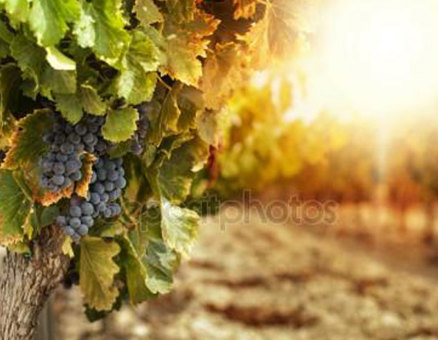
In the past, local wine companies produced grape juice from grapes grown in Israel only. Why do many Israeli grape juice companies have yevul chul stamped on their labels today? What are the halachic ramifications of this change?
Question:
I noticed recently that several Israeli grape juices have יבול חו"ל stamped on their labels (ex. Carmel Tirosh, Efrat Tirosh, and Supersol brand). I have always tried to buy brands that use Israeli fruit. What's the reason these companies are using grapes from abroad? Is this a new phenomenon or did it just go unnoticed by consumers like me? (I know that during shemitah and the year following some companies will change from Israeli-grown grapes to foreign-grown grapes, but it's not shemitah yet.)
Answer:
Yishar ko'ach that you noticed—and especially that you make a point of purchasing produce grown in the Holy Land. I personally enjoy white Carmel Tirosh grape juice. Several months ago I also noticed that it was stamped יבול חו"ל, imported produce. There are many companies that produce grape juice including: Efrat-Teperberg, Carmel (previously Mizrachi), Barkan, and Segal, among others. Most of them produce today grape juice from both Israeli grapes and imported grapes. Note that this change has halachic ramifications.
Halachic difference between fruit from the Land of Israel and fruit from abroad
The Gemara in Berachot 44a states that there is a difference in the ending of me'in shalosh (al hamichya/hapeirot/hagefen) on produce grown in the Land of Israel and produce from abroad. On fruit of the seven species (grapes, figs, pomegranates, olives, and dates) grown in Israel, we say al ha'aretz ve'al peiroteha, while if these fruits grew abroad, we say al ha'aretz ve'al hapeirot. This is the ruling of the Shulchan Aruch (OC §208:10); if in doubt as to the source of the fruit, one should say al ha'aretz ve'al hapeirot (Mishnah Berurah §208:54, quoting Eliya Rabah). If one eats fruits grown in Israel together with those from abroad, one should nevertheless say al ha'aretz ve'al peiroteha, since this ending is more important (Dirshu, n. 24, quoting Rabbi Kaniyevski; see also Piskei Teshuvot, n. 115).
Optimally, consumers should inquire whether such fruit is Israeli-grown or imported.
Today (5781) pomegranates, dates and figs are generally not imported (fresh, as for dried figs – one should check). As for olives, the vast majority are from Israel.
Nevertheless, grapes are sometime imported, usually from Shevat to Nissan (during mid-winter, most local grape cultivars are no longer in season; only around Nissan do Israeli grapes form the new season appear on the market). For this reason, if you do not know the source of the fruit, you can assume it is Israeli-grown and say al ha'aretz ve'al peiroteha; the only exception is grapes from the winter-spring season, when you should say al ha'aretz ve'al hapeirot.
Halachic difference between wine from Israeli grapes vs. grapes grown abroad
As for wine, the Gemara does not state the precise text for al hagefen. The Shulchan Aruch (208:11) maintains that we should say al ha'aretz ve'al peri hagefen, not mentioning a difference between Israeli wine and wine from abroad. Indeed, there are posekim who hold that we should always say al peri hagefen, regardless of the grape's country of origin (Rabbi Kaniyevski, Dirshu §208, n. 25).
However, the mainstream custom is to end the al hagefen after-berachah with al ha'aretz ve'al peri gafnah (Ben Ish Chai I Masei §1; Rabbi Ovadia Yossef, Yabia Omer VII, OC §30; Vezot HaBeracha p. 54; Piskei Teshuvot, n. 117). If, though, one does not know the source of the wine, one should end the blessing al ha'aretz ve'al peri hagefen (based on Mishnah Berurah, ibid.). If one drank Israeli wine and imported wine, it seems one should say ve'al peri gafnah.
So that consumers will know the appropriate berachah to say, the rabbinate issuing kashrut certification to wine and grape juice require the companies to state "יבול חו"ל" on the label of imported grape juice. If grapes grew in Israel, though, nothing is noted on the label.
Today, since many grape juice bottles state that the juice is imported, I asked several rabbis and did not receive a satisfactory answer—until I contacted an agronomist, a veteran in the field of wine and grape juice. He is a G-d fearing Jew who lives in a settlement.
It seems that today, only half of the grape juice is produced in Israel; until 2006, nearly all grape juice was produced from Israeli grapes (with the exception of the shemitah year, when there are many imports). There is no significant difference between red and white grape juice. Why are such large quantities of grape juice imported?
Grapevine Leafroll Virus
Leafroll virus causes leaves to curl. This, in turn, negatively impacts photosynthesis and damages both the yield and quality of the fruit. Grapevine saplings are produced by taking propagative material from mother orchards. In 2007, the propagative material imported to Israel was infected with the virus, and hundreds of hectares planted with the grapevine saplings were affected by it. The young saplings, in turn, infected the mature vines in their vicinity, which dealt a severe blow to the wine industry. In 2016, a similar phenomenon took place.
The result is that for several years there are less grapevines in Israel. While vinegrowers assure that the quality of the grape juice has not been affected, there certainly has been a drastic reduction in quantity. The Ministry of Agriculture currently imports "clean" propagative material from South Africa, but it is impossible to import and plant too many at a time. For this reason, it will take approximately another five years until we have sufficient grape vines in Israel so that all of our grape juice will be locally produced.
In conclusion, before saying al hagefen after drinking your grape juice, first check the source of the grapes so you can say the most precise berachah.