Separating terumot and ma'aserot from oil from a mixture of olives growing in private yards and ownerless land
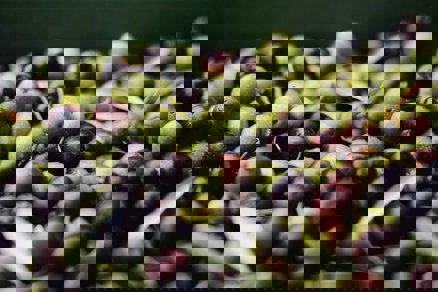
From a mix of ownerless olives and olives from private courtyards, at what stage should terumot and ma‘aserot be separated at the olive press: at the beginning of oil production, in the middle of the process, or when the oil is already in tanks or jars?
Presentation of the Issue
In a particular community, the youth movement coordinators launched a project where the older boys harvested olives from productive olive trees located in private home yards (with the residents’ consent, of course). They also harvested olives from public areas in the community, from trees that are considered possibly ownerless (hefker), as well as from olives that grew in ownerless areas outside the communities. All the trees that were harvested were mature trees that had completed their orlah years.
Following this project, several questions arose:
(a) Since the quantity involved is relatively small, the olive press agreed to produce oil from all the olives together in a single batch. Is it permissible to separate terumot and ma‘aserot from all the oil after it has been produced at the press, or is it preferable to separate from each type of olives separately, prior to oil production?
(b) At what stage should terumot and ma‘aserot be separated at the olive press: at the beginning of oil production, in the middle of the process, or when the oil is already in tanks or jars?
A. Separation after production
Generally, when olives are harvested for oil, it is necessary to wait to separate terumot and ma‘aserot until after the oil has been produced (similar to wine production). Even if terumot and ma'aserot are separated from the olives, the separation is ineffective even bediavad, and terumot and ma'aserot are separated again after oil production. Nevertheless, the olives that were designated as terumah do possess terumah sanctity.[1] The reason for requiring separation only after the process is completed is the concern that people might initially separate terumot and ma‘aserot before oil production in order to avoid the need to guard the olives and grapes in ritual purity until the completion of wine and oil production and the separation of terumot and ma‘aserot.
Some posekim, however, maintain that today there is no need to separate again, since in any case we cannot preserve the oil in ritual purity.[2] This was also the ruling of the rabbis in Massa HaMoshavot (1913 with Rabbi Kook and Rabbi Sonnenfeld) when they arrived in Zichron Yaakov: when there is a pressing need (she'at hadechak), one may separate from oil olives on the olives, as described there (Eleh Masa‘ei, pp. 82–83):
On the eve of the holy Sabbath, in the morning, we went to the winery and the olive press. There was a discussion as to whether it was possible to tithe the olive juice as terumat ma‘aser for the oil. However, we were informed that the time of oil production had already passed, and only a few hours remained for oil work. It was decided that for the time being they would tithe this oil, and in the following year they would appoint a supervisor for this, and then it would be better to tithe the olives.[3]
Nevertheless, in general, when there is no pressing consideration, the posekim rule[4] that even today one must separate again from the oil, but without a blessing.
B. Separation from oil olives with different levels of obligation
In the situation discussed, separating terumot and ma'aserot prior to oil production could prevent mixing exempt and obligated produce. Some olives were harvested from private olive trees that are certainly obligated, while others were harvested from ownerless areas outside the community that are certainly exempt, and still others from public areas whose status as ownerless is doubtful.[5] Clearly, if this involved other fruits or vegetables (except grapes for wine, which are like olives for oil), one could separate terumot and ma'aserot from each obligation level separately, and no separation would be made at all from ownerless produce. However, with olives intended for oil, separating terumot and ma'aserot from the olives prior to oil production is prohibited and ineffective. Therefore, one must wait until after oil production. Ideally, oil should be produced separately: oil from olives certainly obligated in separation, from which separation would be made; and oil from olives certainly exempt together with olives that are obligated only due to doubt, from which separation would be made separately. But since the quantities are small and the olive press is unwilling to do this, the only option is to mix all the olives and produce oil from them, despite that by doing this, we are mixing exempt and obligated produce. This is permitted because in a mixture of oil that is obligated and oil that is exempt, the following rule applies: “yesh bilah ba-lach” – liquids blend. That is, since the mixture is liquid, we treat the entire mixture of oil as produce obligated in terumot and ma'aserot, and accordingly remove the oil designated for terumah gedolah and terumat ma‘aser, since in this situation the proportions between the different obligation levels are preserved in every portion removed.
However, it is important to stipulate when reciting the formula: “What I say shall take effect on each level of obligation separately.” In this way, each portion of oil designated as terumah rectifies the corresponding level of obligation in the oil we wish to rectify. However, for the purpose of giving ma‘aser rishon and ma‘aser ‘ani, one should give only from the quantity that was originally obligated in terumot and ma‘aserot.[6]
C. Amount of terumah gedolah when separating from oil
There is a unique halachah regarding the separation of terumot and ma‘aserot from olive oil with respect to the amount designated for terumah gedolah. By Torah law, it suffices to separate “the first portion” (reishit) for terumah gedolah, even kolshehu -- a bit. However, the Sages stated that terumah gedolah should be separated in an amount estimated at approximately 2% of the produce, so that the priests may benefit from a relatively respectable portion of the crop. In our times, however, separation is done according to the primary Torah law—namely, a minimal amount for terumah gedolah—since terumah is not eaten by the priests due to their ritual impurity.[7] Therefore, the amount generally separated today for terumah gedolah and terumat ma‘aser together is slightly more than 1% of the total produce, that is, a minimal amount for terumah gedolah in addition to the 1% for terumat ma‘aser.
However, when separating terumot and ma'aserot from olive oil, Rabbi Yosef of Trani in Mahariṭ[8] writes that it is appropriate to separate approximately 2% for terumah gedolah, and together with terumat ma‘aser this totals about 3%, since if the oil is rendered impure prior to separation, the priest can use it for lighting Shabbat candles. Based on his ruling, his disciple Rabbi Chaim Benveniste ruled likewise in Shayarei Knesset HaGedolah,[9] as did Rabbi Moshe Necḥemiah Kahanov in Eretz Ḥefetz,[10] and Rabbi Shlomo Zalman Auerbach in Ma‘adanei Eretz.[11] This is the proper practice.
D. The stage of separation
Just as with wine grapes, where separation must be performed after the wine has formed, so too with olives one must separate only at the stage of “completion of processing” (gemar melachah) of the oil. However, there is a fundamental distinction between the gemar melachah of wine and that of oil, as explained below.
1. The stage of separating terumot and ma‘aserot from wine
The Mishnah[12] states that the obligation to separate terumot and ma'aserot from wine begins “from when it foams” (mi-she-yikpah). Rambam explains[13] that this refers to the removal of the foam. Nevertheless, he emphasizes that the halachah does not follow this view, but rather the opinion that the obligation begins only at a later stage—after the skins and pits that float on top of the barrel are removed: “‘From when it foams’—from when something like foam floats on its surface. But the halachic ruling is that one may drink casually until he removes the skins and pits and similar items that float above the barrel and clarifies everything.” Rambam here alludes to Rabbi Akiva's opinion (Avodah Zarah 56a): “Rav Zevid taught in the academy of Rabbi Hoshaya: Wine—from when it descends into the pit and foams; Rabbi Akiva says: from when it is drawn into the barrels.” Rabbi Akiva disagrees with the Tanna of the Mishnah and maintains that while the wine remains in the vat pit, the stage of gemar melachah has not yet been completed, since wine may not be left in the pit for an extended time. Therefore, it is not sufficient to remove the pits and grape skins from the wine while it is still in the pit; rather, this must be done after the wine has already been transferred to the barrels. This is the ruling of both Rambam (Hilchot Ma'aserot 3:14) and Shulchan Aruch (YD 331:86): “What is the completion of the processing of wine? When it is placed in a barrel and the pits and skins are removed from the mouth of the barrel. But while it is in the pit, when one raises it to place it in a barrel, he may drink casually and collect from the upper vat and from the pipe in any place, and drink.”
2. The stage of separating terumot and ma'aserot from olive oil
In contrast, the stage at which oil becomes obligated in separation is earlier—immediately after the olives are crushed and pressed by the beam of the olive press, and after the extracted oil descends into the collecting pit of the press, as stated in the Mishnah (Ma'aserot 1:7): “Oil—from when it descends into the vat (ukah).” Rambam explains (Gloss on Mishnah, ibid., s.v. ukah): “‘Ukah’ is the pit in which the oil gathers.” This explanation is also provided by the Rosh,[14] the Rabbi Ovadia of Bartenura,[15] and Tiferet Yisrael.[16] The Rivmatz and the Rash further explained the function of the ukah: “‘From when it descends into the ‘ukah’—that is, a pit in which the oil collects and becomes clarified.” In other words, the purpose of the oil descending into the ukah is clarification, or what is today called sedimentation—the oil remains in the pit for a certain time until the sediments settle, as is done today. However, even from their words it does not appear that one must wait until the clarification process is complete; rather, it suffices that the oil has descended into the ukah. This is unlike wine, where removal of the grape skins is required, since that stage is apparently significant in defining wine as an important beverage.
Rambam rules (Hilchot Ma'aseort 3:15): “Oil—from when it descends into the ukah.” Today, in modern olive presses, the ukah mentioned in the Mishnah has been replaced by the large tank into which the oil flows after pressing. There is, however, a difference between oil and wine: wine without removal of skins and pits is still considered unfinished, whereas oil does not require this, since naturally the pits and other waste are separated from the olives before pressing. One might nevertheless ask why the production process is not considered complete before the vessels are filled, as opposed to wine, which reaches completion only after filling the barrels and skin removal. Rabbi Chayim Kanievsky explains [17] that after the oil descends into the large tank, there is no harm to its quality even if it is not immediately transferred into containers, and therefore gemar melachah is not the transfer to vessels but an earlier stage. By contrast, with wine the completion of processing requires filtering and placing it into barrels, since without this the wine will spoil—it must ferment in a closed space, as we observe even today. Accordingly, the stage for separating terumot and ma'aserot from oil begins immediately after the oil descends into the large tank in which it collects at the olive press.
Footnotes
[1] Based on the Yerushalmi Terumot 1:5, and as inferred by the Acharonim based on Rambam in Hilchot Terumot (5:18–19), who ruled that if terumot and ma'aserot were separated from olives to exempt oil, one must separate again after oil production; see HaMa‘aser VeHaTerumah, ch. 5, sec. 10.
[2] Rashas, Emunat Yosef, Terumot 1, end of halachah 5 (25b), s.v. ve-hashta nakṭinan; he is also alluded to Kerem Tziyon, Otzar HaTerumot, Halachot Pesukot ch. 22 end of sec. 7, in the name of “some say.”
[3] Expanded upon in the appendices ibid., letter 20 pp. 218–220; they preferred to follow the lenient opinions permitting separation of oil olives from oil olives in our times, rather than separating from olive juice for oil.
[4] Thus inferred by the Acharonim from the words of Kaftor VaFeraḥ, ch. 20 s.v. garsinan; rulings of Rabbi Mordechai Eliahu, HaTorah VeHaAretz V §18, p. 25.
[5] Such as general permission granted to the public, which is not in every case defined as ownerless; see Rabbi Eliezer Weil’s article in Torah VeHa'aretz IV, pp. 58–61.
[6] Based on Rambam, Hilchot Terumot 2:13.
[7] Ibid., 3:1.
[8] Responsa Mahariṭ, §47.
[9] Shayarei Knesset HaGedolah, glosses to the Tur, YD §331:23.
[10] Eretz Ḥefetz 4:37.
[11] Ma‘adanei Eretz, Terumot 3:1, end of letter 4.
[12] Mishnah, Ma'aserot 1:7.
[13] Rambam, Gloss on the Mishnah, ibid., s.v. mi-she-yikpah.
[14] Rosh, Ma'aserot 1:7, s.v. ‘ukah.
[15] Rabbi Ovadiah of Bartenura, Ma'aserot 1:7, s.v. le-ukah.
[16] Tiferet Yisrael, Ma'aserot 1:67. It may be added that ‘ukah is, by interchange of letters, also called ‘ugah, meaning a round pit, similar to the Talmudic expression (Mo‘ed Katan 3a): “and they make circular pits for the vines,” and likewise in Rambam, Hilchot Shemitah veYovel 1:9, referring to basins around vines for irrigation water.
[17] Derech Emunah, Hilchot Ma'aserot 3:15:134, and Bi'ur Halachah, ibid.