The Prohibition of Uprooting Fruit Trees
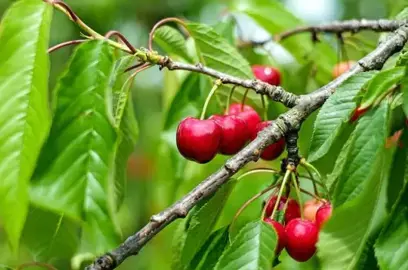
The prohibition of uprooting fruit trees is complex. What are the parameters of this prohibition? Does it also apply to trees that self-seeded? And which types of trees are included in the prohibition? Rabbi Yoel Friedemann clarifies the matter.
The source of the biblical prohibition to uproot fruit trees appears in Devarim (20:19): “You shall not destroy its trees.”[1]
This prohibition applies specifically to fruit trees. Uprooting non-fruit trees (atzei serak) is not included in the biblical prohibition.[2] Nevertheless, wanton destruction of such trees is rabbinically forbidden, just like destroying other items such as tools or clothing.[3]
Trees or shrubs that produce fruit not commonly eaten[4] that are bothersome—whether because the fruits fall and cause a mess, or because the space is needed for planting other vegetation or trees—may be uprooted by a non-Jew, as explained below.
A fruit tree that grew on its own, or was planted or sown without the knowledge of the landowner,[5] may be uprooted only under the same conditions that generally permit uprooting fruit trees, as outlined below.
The prohibition of lo tashchit applies only when the tree is uprooted entirely, including its roots. Pruning or cutting branches does not fall under this prohibition.[6]
If a fruit tree produces only a minimal yield,[7] and it is not worthwhile to maintain it,[8] or if the value of the tree itself exceeds the value of its fruit,[9] it is permitted to uproot the tree.
If a fruit tree damages a neighbor’s trees, home, or property, it is permitted to uproot it.[10]
Some posekim maintain that even when it is halachically permitted to uproot a fruit tree, there is nevertheless a concern of danger, and therefore one should refrain from doing so.[11] Certainly, one should avoid it at least in cases where there is doubt regarding the prohibition.[12] Others disagree and maintain that when uprooting is deemed halachically permissible, there is no concern of danger.[13]
Some posekim permit uprooting a fruit tree to use the area for building a house or similar needs;[14] others qualify this and permit it only when building a residence necessary for one’s essential living needs, but if it is merely for added comfort, it is forbidden;[15] others disagree and hold that it is forbidden to uproot a fruit tree even when one needs the space.[16]
Some posekim permit transplanting fruit trees if removed together with a clump of soil encasing its roots large enough to allow it to survive;[17] others disagree.[18]
In cases of doubt—such as when there is a dispute among the posekim, or it is unclear whether the fruit yield is sufficiently poor to justify uprooting—the preferable course of action is to commission a non-Jew uproot the tree[19] together with a clump of soil encasing its roots large enough to allow it to survive, and transplant it elsewhere.[20]
For the original article in Hebrew, see here.
Footnotes
[1] Although the verse refers to a siege against enemies, the Gemara (Bava Kamma 91b; Bava Batra 26a) maintains that this prohibition applies even outside such contexts; see Tosafot (Bava Kamma, s.v. hachovel), and Rashba, ibid.
[2] See the article by Rabbi Yehuda Halevy Amichay, HaTorah VeHa’aretz V, pp. 245–251, and the response of Rabbi Yaakov Ariel, ibid., p. 252.
[3] See Rambam, Hilchot Melachim 6:10 regarding destruction in other contexts (“a destructive manner”). When destruction is done “in a destructive manner” regarding other items, the posekim dispute whether the prohibition is rabbinic (see Nodah BeYehudah Mahadurah Tanyana YD 10; Chayei Adam 11:32) or biblical but without lashes (Minchat Chinuch, mitzvah 529). See also Sedei Chemed 1:2 §17.
[4] According to Tosafot (Bava Batra 26a, s.v. ana), carob and sycamore are considered non-fruit trees and may be cut down; similarly, Tevurat Chaim (Rabbi Natan Tzvi Hirsh Schorr) on Bava Batra, ibid.; however, Chiddushei HaRan (ibid.) disagrees; see also Kesef Mishneh on Hilchot Melachim ibid., and other Acharonim who questioned Tosafot, since carob and sycamore are fruit-bearing trees.
Responsa Zichron Yehudah (Greenwald) 2:155, and Rabbi Avraham David Horowitz, Responsa Kinyan Torah §39, explain that the non-fruit trees mentioned in the baraita (Bava Kamma, ibid.) — “It is also taught: ‘only a tree that you know,’ this refers to a fruit tree, ‘for it is not a fruit tree’ — this refers to a non-fruit tree” — refers to trees whose fruits are inferior. Nevertheless, even such trees are forbidden to uproot (although it may be prioritized for removal over regular fruit trees during a siege). Practically, they suggest commissioning a non-Jew to uproot them.
[5] Yad David (Zinzeheim, Bava Metzia 101a, s.v. im amar zayti) suggests that the prohibition applies only to intentionally planted trees. However, Responsa Chavot Yair (§195) discusses the case of a self-seeded peach tree and seeks grounds for leniency only under specific conditions (e.g., damage or the need for space for construction), implying the prohibition still applies.
[6] Mishneh Lamelech, Hilchot Issurei Mizbe’ach 7:3; Responsa Chaim Sha’al 1:22; Responsa Har Tzvi OC 101; Responsa Yechaveh Da’at 5:46; see also Be’er Sheva, Tamid 29b.
[7] The Gemara (Bava Kamma, ibid.) considers a date palm producing one kav (roughly 1.4 L in volume) of fruit to be minimal; for olives, even a quarter-kav (345 ml).
[8] Rambam, Hilchot Melachim 6:9.
[9] Rashi, Bava Kamma 91b, s.v. ve’im.
[10] Bava Batra, ibid.; Rambam, ibid., 6:8.
[11] Based on the Gemara in Bava Kamma, ibid., and Bava Batra, ibid.: “My son Shivchat(/Shichechat) died only because he cut down a fig tree before its time”; and especially Bava Batra, ibid.: “Rava bar Rav Chanan said: I do not cut down.” See Responsa Meshiv Davar 2:56; Tosafot (Bava Batra s.v. ana) explain that when the tree causes damage occurs, it is permitted to cut down another’s tree when it causes damage is permitted when paying monetary compensation to the owner, but only for non-fruit trees or when grape vines damage date palms. Responsa Divrei Chaim (YD 2:57) writes that if the fruits are not considered valuable by the owner subjectively, there is no prohibition of bal tashchit, though there may still be danger since in people in general consider them valuable.
[12] Responsa Chatam Sofer, YD 2:102.
[13] Ramban, Bava Batra, ibid.; similarly concluded by Aliyot deRabbi Yonah. ibid., though he also records dissenting views that it is only a pious stringency; Rashba, Ritva, Ran ibid.; see also Rosh, Bava Batra 2:28, who rules like Rav Yosef (zil kotz, “go cut it”), not like Rava bar Rav Chanan (ana lo keitzana, "I will not cut"); Responsa Chaim Sha’al 1: 23 “And it seems to me that these matters are simple … and when it is halachically permissible [to cut down trees], there is no danger; Responsa Shevut Yaakov 1:159; Responsa Chokrei Lev (Chazan), YD ed. 2 §11; Responsa Binyan Tzion (Altlinger) 1:61.
[14] Rosh, Bava Kamma 8:15 end; Rabbeinu Yerucham, Meisharim 31:2; Taz YD 116:6; Knesset HaGedolah YD 116, Hagahot Beit Yosef 31; Mahari Basan §101, if one builds in the normal manner, if the standard would be to uproot a fruit tree to allow for construction, it is permitted; similarly Responsa Chokrei Lev, ibid.; Responsa Binyan Tzion, ibid.; see also Pitchei Teshuvah YD 116:6; Sedei Chemed II end of §47 (Kehat pub. vol.VII).
[15] Responsa Chavot Yair 195; Zivchei Tzedek Chadashot (Somach) §24.
[16] Responsa Beit Yaakov §140.
[17] Responsa She’eilat Ya’avetz 1:76; Yad David (Zinzeheim) Bava Metzia 101; Responsa Chaim Sha’al 1:23; similarly implied by Ra’avan EH 1:21 end; see also various responsa: Shevut Yaakov 1:159; Chokrei Lev, ibid.; Sho'el U’Meishiv ed. 4 1:28 end; Arugat HaBosem §120; Riva (Ungar) YD §17; Pri HaSadeh 2:105; Teshuvot Binyan Tzion, ibid.
[18] Responsa Chatam Sofer, ibid., though he agrees it is possible to rely on the view that transplanting a tree with its clump of soil is not considered bal tashchit when combined with other factors that allow for leniency; Chazon Ish, Orlah §18.
[19] Some recommend formally selling the tree to a non-Jew before uprooting it; see Responsa Beit Shlomo (Drimer) YD 2:192 and Sho’el U’Meishiv, ibid.; Responsa Binyan Tzion states one may rely on the views of the Ra’avad and Or Zarua that the issue of shevut does not apply to other prohibitions. Responsa Mahari Ashkenazi YD §33; Responsa Neta Shorek (Tannenbaum) YD §42 — recommending stringency via sale to a non-Jew, since otherwise it would be amirah le’akum. The issue of lo techonem does not appy since it is sold to be chopped down immediately (see Avodah Zarah 20b; Rambam, Hilchot Avodah Zarah 10:4; Shulchan Aruch YD 151:7).
[20] See Responsa Meshiv Davar, Chatam Sofer, Chaim Sha’al, Zivchei Tzedek, Beit Yitzchak, Zivchei Tzedek Chadashot, ibid.; Beit Yitzchak (Shmelkes) YD I 142:10; Chaim B’Yad (Rabbi Chaim Palaggi) §24.