
How is Yom Ha'atzma'ut connected to the level of obligation of terumot and ma'aserot?
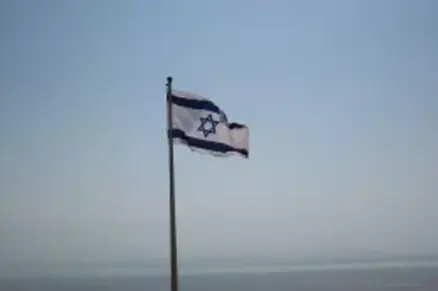
Does the reinstatement of Jewish sovereignty over the Land of Israel impact the level of obligation for land-dependent mitzvot?
An intriguing question was raised by Rabbi Shaul Yisraeli zt”l following the War of Independence (5th of Iyar, 5708 / 1948) in his work Eretz Hemdah (Vol. I, p. 135):
The hand of G-d was revealed upon His people in His land—the establishment of the State of Israel was proclaimed… We have merited once again Jewish independence in the Land of Israel. It is now necessary to clarify to what extent conquest and sovereignty affect the obligations of the mitzvot dependent on the Land.
A similar question was raised in the study hall of Rabbi Rosenthal zt”l, and recorded in his book Kerem Tzion Otzar HaTerumot (p. 3): after the liberation of our land, has the former status been restored regarding the obligation of separating terumot and ma’aserot such that it once again carries a Torah-level obligation?
He revisited this question with even greater force after the Six-Day War (28 Iyar 5727 / 1967), writing:
It is fitting nowadays, after the Six-Day War—where, thank G-d, almost all the expanses of the land were conquered by our fellow Jews in accordance with the great prophetic promises—to investigate whether the former status has indeed returned with respect to the biblical obligation of terumot and ma’aserot.
He cites (ibid.) Hilchot Eretz Yisrael, attributed to Rabbeinu Yaakov ben Asher (the Tur) (ch. 2, §10):
In my opinion, sanctification does not require the conquest of all of the olei Mitzrayim territories. Even today, if there were a single city in the Land of Israel designated for Jewish residence, with fields belonging to Jews, and no fear of a foreign power that could expel them, this itself constitutes its sanctity, and it would be biblibally obligated in terumot and ma'aserot.
From this, a strong connection emerges between the conquest of the land and Jewish sovereignty within it, and the present-day obligation to separate terumot and ma’aserot. However, he also cites the Klei Chemdah, which rejects this attribution and concludes that the passage is not authentically from the Tur. Nevertheless, Rabbi Rosenthal explains that the Tur’s intent in the phrase, “and there is no fear of a foreign power that could expel them” refers to a situation achieved through military conquest.
Rabbi Rosenthal concludes that after the Six-Day War, there is certainly room to reconsider the status of the land-dependent mitzvot today:
But not so in our present time—after a war forced upon us, in which, with God’s help, we merited the conquest of parts of the land across nearly all those broad boundaries defined in the Torah’s promises, fulfilling the verses ‘and the land shall be conquered’ (Bamidbar 32) and ‘every place upon which the sole of your foot shall tread I have given to you’ (Yehoshua 1). If so, this constitutes conquest through war, and we must reexamine this issue—whether the sanctity of the land has returned, namely through conquest and the division of the Land of Israel by Yehoshua bin Nun.
Rabbi Yisraeli, in Eretz Hemdah (ibid.), states that two conditions are required for halachic conquest: it must be for the sake of all Israel, and there must be no authority of others over them. However, the conquest doesn't need to be carried out specifically by a king, a Sanhedrin, or even a majority of Israel. He concludes that these conditions are indeed present in contemporary times:
The conquest was undertaken on behalf of all Israel, not for a particular tribe or segment of the nation. And with the recognition of the State of Israel, no other authority rules over us. (Written following the UN Partition Plan)
In a later addendum composed after the Six-Day War (Iyar 5727), Rabbi Yisraeli adds:
Upon further reflection, I see that even the nature of modern conquest—though it may appear merely as a transfer of governance without affecting private ownership—should nonetheless be regarded as full conquest in all its legal implications … Accordingly, the validity of conquest in our time is comparable to that of earlier eras, including the laws of sanctity that depend upon conquest, when it is carried out as a conquest of the many … Though the matter still requires further analysis.
Thank G-d, we have merited the beginning of redemption, as He has returned His people to the Land of Israel and restored broad areas of it under Jewish sovereignty. May we all pray for the continued restoration of our entire land, in all its regions and boundaries.